I know my main topic here is politics but sometimes auto-related stuff (my other passion) gets thrown in for good measure, this is one of those instances.
In one of my previous posts, I discussed laws that concerned the Pruis and other electric cars having some kind of alert system for pedestrians because they ran so quietly in comparison to other cars. I brought up the Fisker Karma which has a speaker system outside the car that imitates the sounds of a combustion engine running at the approximate speed and RPMs of the electric engine.
Toyota who make the Prius, my main concern, are doing something about it! Toyota who is under suit because someone in a Pruis hit a kid in the street who claimed he didn't even hear a car coming at all. Obviously there are a lot of facts of this case that aren't available yet because it could have been the kid's fault for being in the street.. but I digress. Now Toyota has announced a joint project with Lotus to put 300 Watt speakers just behind the car's grill that mimic a flat-6 or V8 engine sound to warn those in front of them of the hybrid's impending arrival.
I'm glad that the auto industry is finally updating their ways considering that although Hybrids may help the environment in various ways (although that is questionable.. part 1, part 2, part 3) the creation of hybrids also creates new problems. Although I am not a fan of government regulations because they usually bungle it, the federal gov't should definitely start talking regulation to ensure saftey if the industry is so slow to adopt safety measures.
Autoblog story - here
Showing posts with label Green Movement. Show all posts
Showing posts with label Green Movement. Show all posts
Tuesday, August 5, 2008


Sunday, July 20, 2008
Green Cars: Part Three
Yikes, last time I did this there were some pretty nasty email and a few unhappy comments but the show must go on. It is my responsibility, I feel, to rip off those rosy lenses off the collective eyes of the world and show what kind of improvement so-called "green" cars are really making.

Hydrogen makes me think of things like.. the number one, the letter "H", wonderful days of High School and College Chemistry, and of course, the Hindenburg. As it turns out Aluminum had more to do with the Hindenburg accident than Hydrogen so we'll leave it off the list. So how exactly is Hydrogen going to be the next magical substance to make rainbows and make Al Gore smile?
The idea behind Hydrogen powered vehicles is that either 1) they use Hydrogen for combustion alongside gasoline (petrol, for those in the UK) or 2) Hydrogen be used in fuel cells, forced to react with Oxygen which would create a water byproduct and generate electricity to run an engine. [Forgive me if I've oversimplified the processes, these are just description for the Average Joe (or Jane)]

The first method, the gasoline/hydrogen combustion engine, is being used in the beautiful, new BMW Hydrogen 7 (pictured above). This seems to be a pretty good idea, creating a true hybrid vehicle however there are some issues in the realities of this method. First, a passable infrastructure for the mass manufacture and distribution of Hydrogen is about 15 to 20 years away. Second, the hydrogen tank is normally under pressure however, if the car is not used for 17 hours the tank begins to lose pressure and leak out the hydrogen - meaning that if you don't use your car for about 4 or 5 days in a row, your tank will be empty. Thirdly, the process to create and distribute Hydrogen to fueling stations is itself very inefficient. In fact, according to experts in the field it is about 1/4th as efficient as using battery technology and a little less efficient than the current hydrogen fuel cell technology. Overall, I like the idea but unless a major breakthrough happens in the storage and infrastructure of hydrogen fueling stations.. it will remain an Al Gore fantasy not reality.
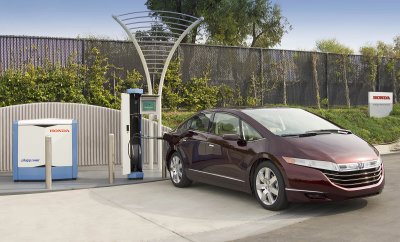
The second method is using Hydrogen in a fuel cell, react it with Oxygen and water leaks out the tail pipe as electricity runs your motor. This is the more popular vein of hydrogen technology automakers are trying to adapt (such as the Honda FCX pictured above).
Again, most problems with Hydrogen fuel cells is that the technology just isn't caught up to reality. 1) The fuel cell technology is currently prohibitively expensive (they contain platinum and other rare metals) in exchange for comparative performance to most of today's autos. 2) The hydrogen fuel cells are very brittle and weak and cannot handle even the normal bumps and vibrations of an average road. 3) The fuel cells can't stand up to cold weather especially freezing conditions because that impedes their start-up process and the byproduct of the process is water.. which freezes causing some problems in exhaust. 4) The infrastructure is neither in place nor is there a comprehensive plan to implement to get hydrogen stations allover the country. 5) Other fuel cell technologies are far more efficient in a comparison done by MIT's Technology Review in 2007 of grid-to-motor efficiency electric hybrids were 86% efficient in comparison to 25% for the hydrogen fuel cell vehicles.
Ouch... There we go. More than a few reasons why "green" cars are not quite what they are portrayed as, instant band-aids to the world-wide crunch. What is the solution then? Well, until technology and innovation catch up with the dreams of the automobile industry there are a few steps that we can take to curb both pollution and the dependence on oil. You can: ride public transport, drive slower.. you get more MPGs, buy a vehicle that actually fits your lifestyle - no SUVs for Soccer moms and no enormous trucks for guys who will never haul anything, stay smart make less trips with your vehicle by combing them and planning them out. There are plenty more tips I'm sure floating around in the interwebs and if you care to scratch the surface.. you will be flooded.
Link: The Last Car You Would Ever Buy -- Literally - MIT's Technology Review
Day Three: Hydrogen Vehicles
Hydrogen makes me think of things like.. the number one, the letter "H", wonderful days of High School and College Chemistry, and of course, the Hindenburg. As it turns out Aluminum had more to do with the Hindenburg accident than Hydrogen so we'll leave it off the list. So how exactly is Hydrogen going to be the next magical substance to make rainbows and make Al Gore smile?
The idea behind Hydrogen powered vehicles is that either 1) they use Hydrogen for combustion alongside gasoline (petrol, for those in the UK) or 2) Hydrogen be used in fuel cells, forced to react with Oxygen which would create a water byproduct and generate electricity to run an engine. [Forgive me if I've oversimplified the processes, these are just description for the Average Joe (or Jane)]
The first method, the gasoline/hydrogen combustion engine, is being used in the beautiful, new BMW Hydrogen 7 (pictured above). This seems to be a pretty good idea, creating a true hybrid vehicle however there are some issues in the realities of this method. First, a passable infrastructure for the mass manufacture and distribution of Hydrogen is about 15 to 20 years away. Second, the hydrogen tank is normally under pressure however, if the car is not used for 17 hours the tank begins to lose pressure and leak out the hydrogen - meaning that if you don't use your car for about 4 or 5 days in a row, your tank will be empty. Thirdly, the process to create and distribute Hydrogen to fueling stations is itself very inefficient. In fact, according to experts in the field it is about 1/4th as efficient as using battery technology and a little less efficient than the current hydrogen fuel cell technology. Overall, I like the idea but unless a major breakthrough happens in the storage and infrastructure of hydrogen fueling stations.. it will remain an Al Gore fantasy not reality.
The second method is using Hydrogen in a fuel cell, react it with Oxygen and water leaks out the tail pipe as electricity runs your motor. This is the more popular vein of hydrogen technology automakers are trying to adapt (such as the Honda FCX pictured above).
Again, most problems with Hydrogen fuel cells is that the technology just isn't caught up to reality. 1) The fuel cell technology is currently prohibitively expensive (they contain platinum and other rare metals) in exchange for comparative performance to most of today's autos. 2) The hydrogen fuel cells are very brittle and weak and cannot handle even the normal bumps and vibrations of an average road. 3) The fuel cells can't stand up to cold weather especially freezing conditions because that impedes their start-up process and the byproduct of the process is water.. which freezes causing some problems in exhaust. 4) The infrastructure is neither in place nor is there a comprehensive plan to implement to get hydrogen stations allover the country. 5) Other fuel cell technologies are far more efficient in a comparison done by MIT's Technology Review in 2007 of grid-to-motor efficiency electric hybrids were 86% efficient in comparison to 25% for the hydrogen fuel cell vehicles.
Ouch... There we go. More than a few reasons why "green" cars are not quite what they are portrayed as, instant band-aids to the world-wide crunch. What is the solution then? Well, until technology and innovation catch up with the dreams of the automobile industry there are a few steps that we can take to curb both pollution and the dependence on oil. You can: ride public transport, drive slower.. you get more MPGs, buy a vehicle that actually fits your lifestyle - no SUVs for Soccer moms and no enormous trucks for guys who will never haul anything, stay smart make less trips with your vehicle by combing them and planning them out. There are plenty more tips I'm sure floating around in the interwebs and if you care to scratch the surface.. you will be flooded.
Link: The Last Car You Would Ever Buy -- Literally - MIT's Technology Review
Monday, May 5, 2008
Green Cars will turn the world Brown too

Heil to the mighty Prius.. now featuring cute kitty exhaust!"
The so-called "Green Revolution" must affect people's brains in some odd way as to make them short-sighted and arrogant. The movement for conservation and preservation of nature is something I support, however, there are smart ways to save... and then there are ways that feel good but are just plain dumb. One of my greatest pet peeves is people's new attitudes towards the new generation of alternate energy cars, which fall into three categories: Electric Battery Hybrids (Toyota Prius), Plug-in Hybrids (Chevrolet Volt), and the Hydrogen Car (BMW Hydrogen 7). I will tackle each of these abominations in a separate post so stay tuned!
Day One: Electric Battery Hybrids
Wow, this seems like the perfect answer! Less emissions AND greater fuel economy... what more could you ask for?! It must work by magic, making the evil oilman go away and the ozone will be effected a lot less! Wow!
OK.. now seriously, if you just bought that happy go-lucky picturethen you haven't thought this idea out. The whole idea behind this car is how great it is for the environment but what about that little magical device that makes the car so 'wonderful', the BATTERY? Now someone remind me.. what are batteries filled with? what are they made out of? Right... plastic and acid. Plastic doesn't exactly evaporate into thin air when you're done using it.. it sits in a dump for a couple thousand years and breaks down very, very slowly. The acid could be neutralized if disposed of properly using more chemicals which also take a bunch of energy.. which has to come from somewhere.. right? Hmm...
Another thing, those batteries are worth about 8,000 buckaroos (or USD, for those not familiar with the term). The warranty on the car only covers the battery for four years.. during that period if you have a problem they just throw it out and replace it... doesn't seem as eco-friendly as simply getting your car fixed with a hammer and wrenches. After the warranty period if the battery goes out, you've totaled you car. You are up carbon-footprint creek without a paddle.
Finally, let's face it.. most people buying Priuses are not doing it for fuel economy, in fact only 37% said that was their motivation. According to a survey written up in the New York Times in 2007 (link below), the main reason people bought the Prius was for making a statement about themselves. Hmm... so do owners care about the environment or do they just want to put a smug smile and lambaste everyone about how they've done "part to save the rain forests and save the web-footed orange pigeon." If people are so into the carbon off-sets business ought to also pay-up for all the energy consumed just to make your fancy vehicle which includes the factory, the workers, their vehicles which got them to work, their homes - (they need to live somewhere, right?), their families, etc...
Toyota Prius Review
Look at me Factor.. B, personally I think it looks forgettable but folks go ga-ga over it for some reason
Interior.. D, for goodness sakes the glued on the vents and the interior is made of cheap plastic!
Overall.. F, A eco-friendly vehicle that's actually worse for the environment in the long run.. wonderful!
Links:
Maynard, Micheline; Nick Bunkley and Mary M. Chapman contributing. "Say 'Hybrid' and Many People will Hear 'Prius.'" The New York Times, via nytimes.com, 2007-07-04. Retrieved on 2007-08-13.
Subscribe to:
Posts (Atom)